Reading the image
These twelve entries are Potala Karma’s editorial selection, rather than a fixed set recognised across Tibetan Buddhist traditions. They bring together figures with different roles, including Shakyamuni Buddha, the revered teacher Padmasambhava, and deity imagery encountered in devotional art.
A living visual language
Look first at the image: its posture, gestures, attributes and surrounding figures. These details belong to particular artistic and religious traditions. The term yidam refers specifically to a chosen meditational deity; it is not a general name for every figure represented here.
Artwork & source · CC0
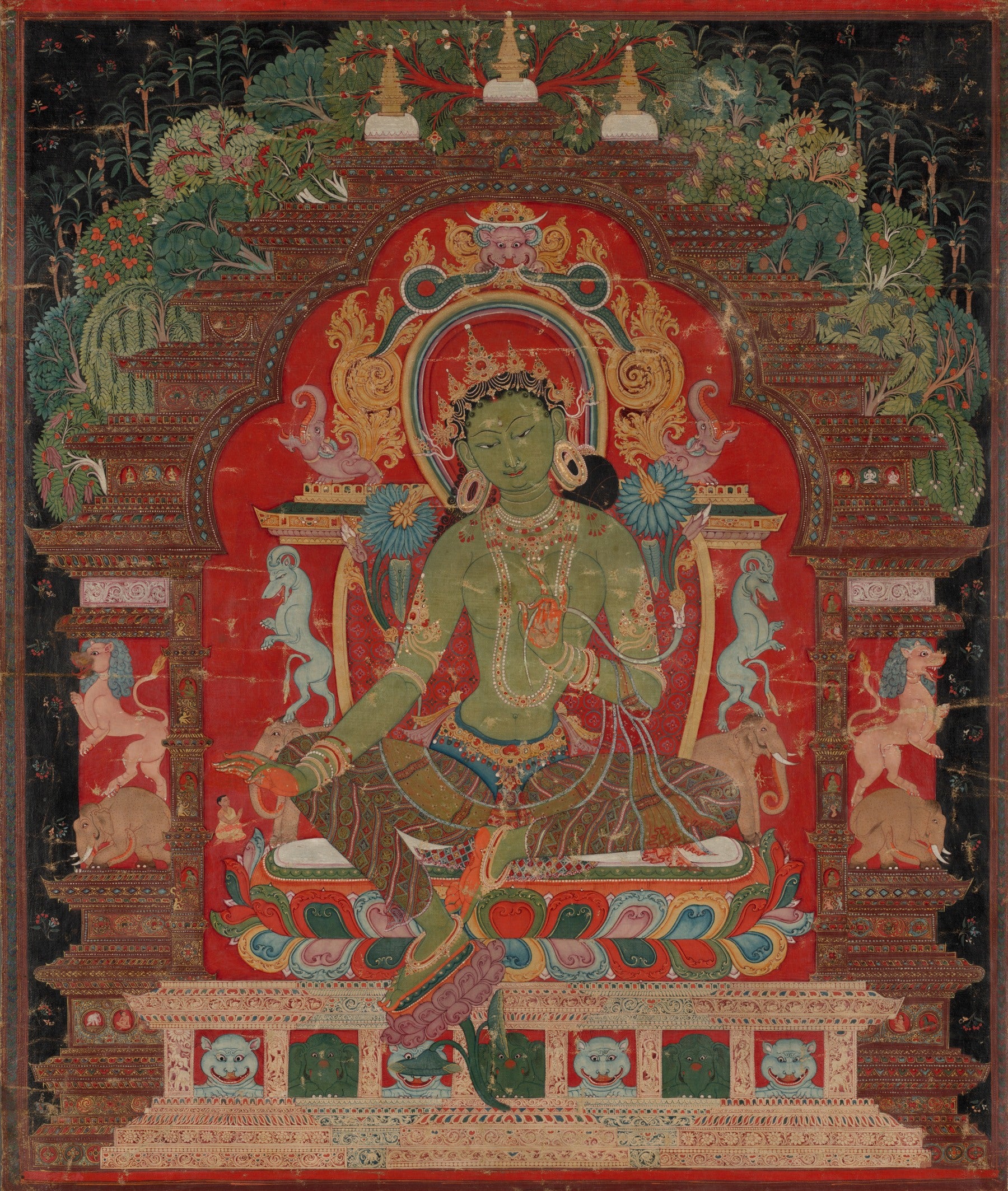
Green Tara
Green Tara belongs to a much larger world of Tara imagery. In familiar peaceful depictions, her extended foot suggests readiness to respond, while a lotus and an open giving hand accompany her poised posture. These details connect her image with active compassion. Different forms follow different iconographic traditions; one picture cannot stand for every manifestation of Tara.
Cultural reference · Asian Art Museum
Green Tara is a female enlightened figure associated with active compassion in Tibetan Buddhist traditions. Her extended right leg is a familiar sign of readiness to respond.
For Potala Karma, her image offers a simple point of reflection: kindness can be active. A small, thoughtful response, a courageous first step, or attention given at the right moment can make compassion part of everyday life.
Explore depictions & cultural recommendations →
Artwork & source · Public Domain Mark
White Tara
White Tara is associated with long life in Tibetan devotional traditions, while the wider Tara tradition includes many forms. The title “Seven-Eyed Tara,” found in museum catalogues, draws attention to an important identifying feature of her imagery. Read longevity here as a traditional religious association, rather than a health claim or an effect guaranteed by a piece of jewellery.
Cultural reference · Project Himalayan ArtSeven-Eyed Tara · Nelson-Atkins Museum
White Tara is associated with longevity and compassionate care. Her seven eyes, when shown, express attentive awareness.
In Tibetan Buddhist devotion, White Tara is associated with longevity, compassionate care, and the conditions that support spiritual practice. Her image invites a quieter kind of strength: making time to rest, noticing what needs care, and valuing the life already present around us.
Explore depictions & cultural recommendations →
Artwork & source · Public Domain
Palden Lhamo
Palden Lhamo, the “Glorious Goddess,” is encountered as a female protector in Tibetan Buddhist art. Her fierce appearance and mule mount belong to a particular symbolic language. Museum interpretations read this imagery within protection of the teachings and the cycle of existence. A gentle modern illustration may emphasise another mood, but should not erase the protector’s traditional context.
Cultural reference · Asian Art Museum
Palden Lhamo is a female protector in Tibetan Buddhism. Her wrathful appearance and mule mount belong to a particular protective iconography.
Her imagery brings together vigilance, resolve, and commitment to safeguarding the teachings. For a contemporary viewer, it can prompt reflection on the difference between aggression and principled firmness: protecting what matters, keeping a promise, and remaining attentive when circumstances become difficult.
Explore depictions & cultural recommendations →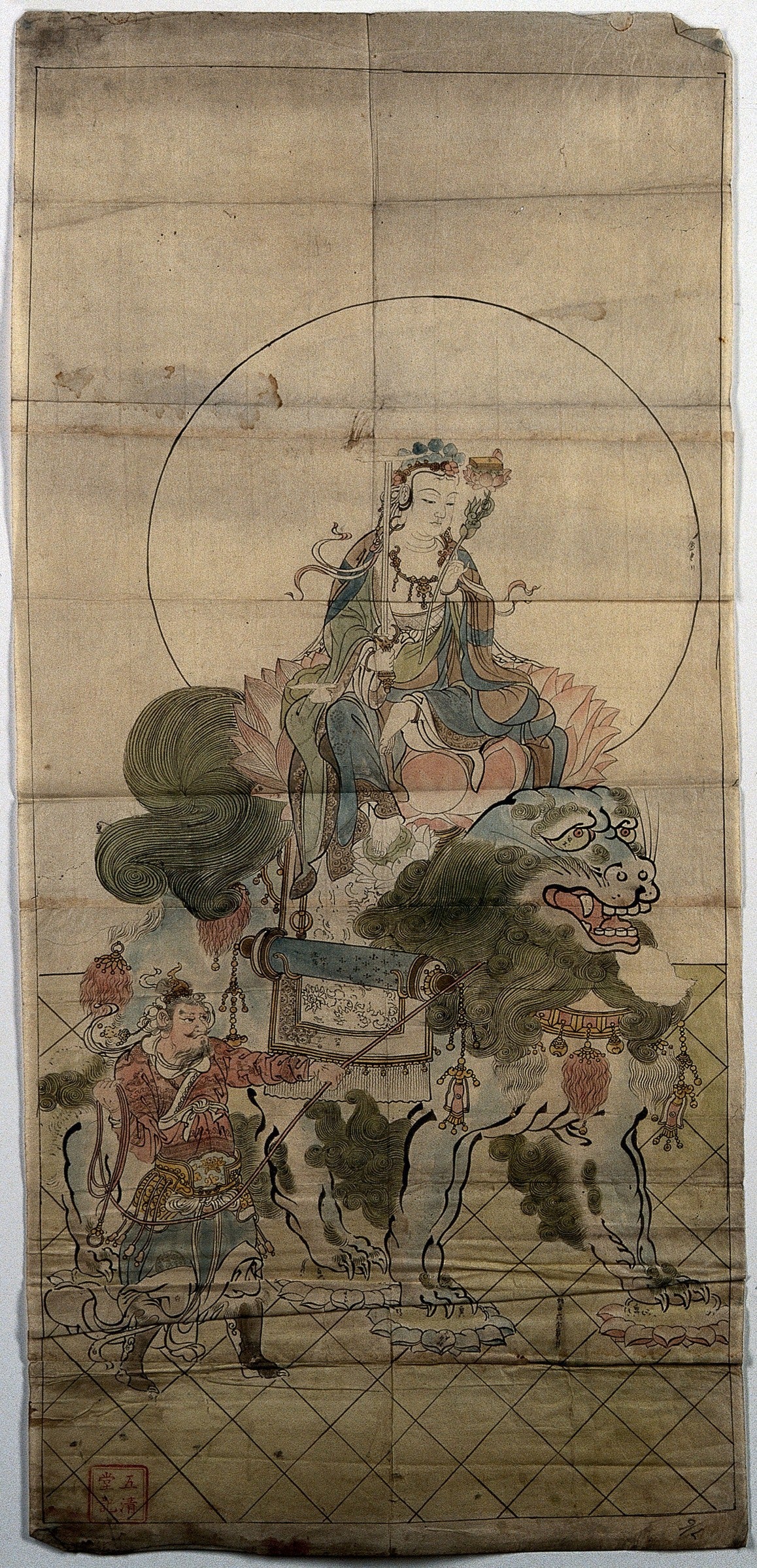
Artwork & source · Public Domain Mark
Manjushri
Manjushri personifies wisdom. A sword and a book are familiar attributes: the sword expresses wisdom cutting through ignorance, while the text points toward Buddhist learning. Not every representation carries both in the same way. Some forms use different gestures or multiple arms, reflecting the texts and traditions behind the image rather than a change in its value.
Cultural reference · Asia Society Museum
Manjushri is the bodhisattva of wisdom. A sword and a lotus bearing a book are characteristic attributes; the lion mount appears in some forms.
His symbolism speaks to more than collecting information. It points toward discernment: looking carefully, questioning assumptions, and recognizing what is useful and true. In daily life, his image can serve as a reminder to pause before judging and to bring clarity together with compassion.
Explore depictions & cultural recommendations →
Artwork & source · CC0 / Public Domain
Shakyamuni Buddha
Shakyamuni is the historical Buddha, distinct from the protectors, bodhisattvas and teachers introduced elsewhere in this selection. A commonly depicted lowered right hand calls the earth to witness his awakening; monastic robes and a bowl may accompany it. That episode belongs to the traditional account of enlightenment. Look at the particular image before assigning a gesture’s meaning.
Cultural reference · National Museum of Asian Art
Shakyamuni is the historical Buddha. In many Tibetan paintings, his right hand reaches toward the earth and his left holds an alms bowl.
Shakyamuni’s image is associated with awakening, disciplined attention, and compassionate teaching. Its quiet presence invites a practical reflection: notice what is happening, examine habitual reactions, and make room for a more considered response.
Explore depictions & cultural recommendations →
Artwork & source · CC0
Yamantaka · Vajrabhairava
Vajrabhairava is a wrathful form associated with Manjushri and is often discussed under the name Yamantaka. His complex imagery belongs to tantric meditation and specific transmissions. Multiple heads, limbs and attributes should be read within that framework, rather than reduced to a general symbol of aggression. This introduction offers cultural orientation; it does not teach the ritual practice.
Cultural reference · Robert Beer Archive
Yamantaka, including the Vajrabhairava form, is a wrathful Buddhist meditational figure associated with Manjushri. The buffalo head is an important identifying feature.
The name Yamantaka evokes overcoming Yama, the lord of death. Within Buddhist interpretation, this points toward confronting death, fear, and ignorance through realization. For everyday reflection, the imagery suggests looking directly at difficulty without allowing fear to become the only voice in the room.
Explore depictions & cultural recommendations →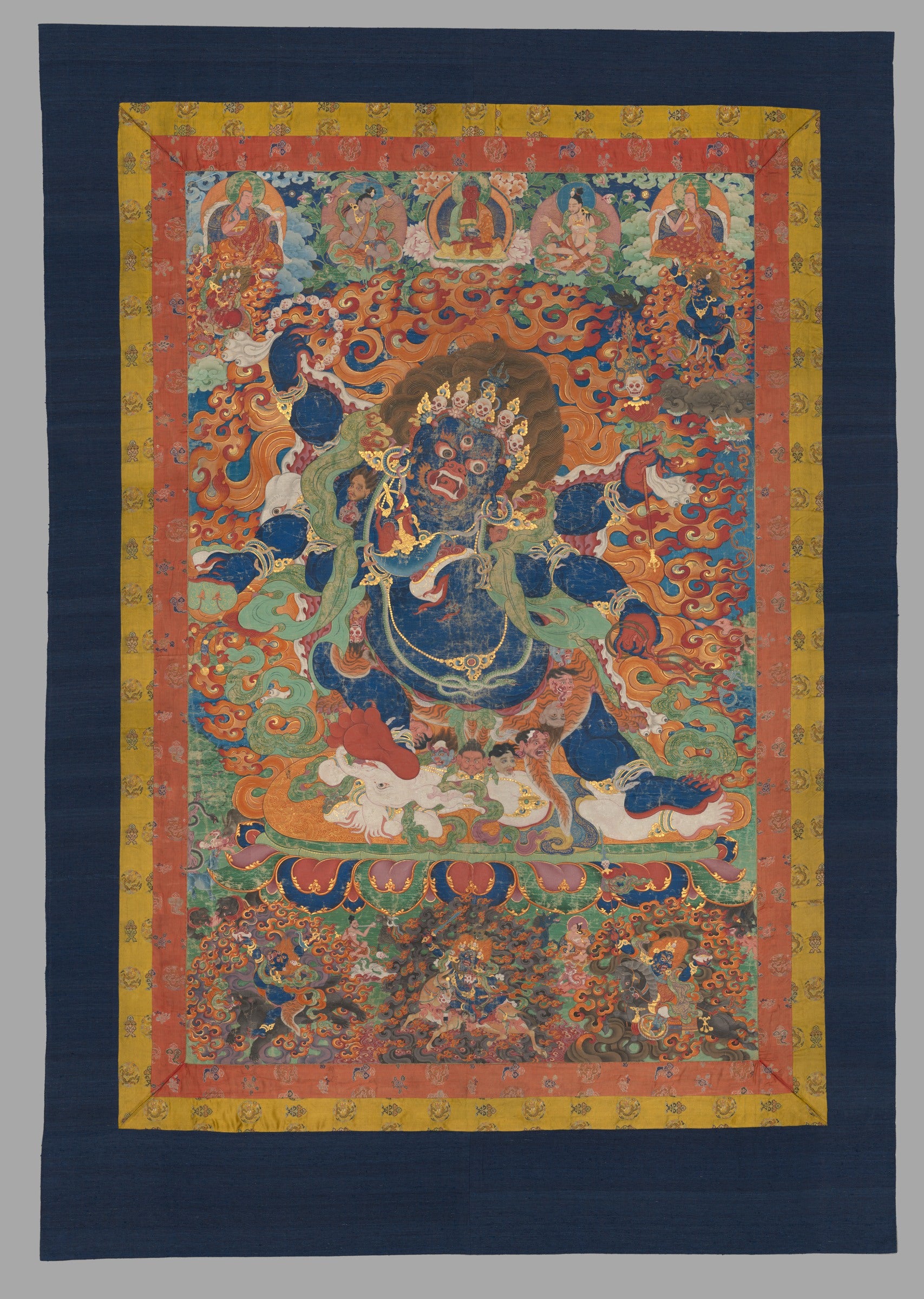
Artwork & source · CC0 / Public Domain
Mahakala
Mahakala is represented in several forms, with different numbers of arms and different attributes. The six-armed protector and the two-armed Panjaranatha should not be treated as interchangeable images. Fierceness has a protective religious meaning in this setting. Identifying the form, its objects and its surrounding figures is more useful than reading the dark colour alone.
Six-armed form · The MetPanjaranatha · Rubin Museum
Mahakala is a Buddhist protector represented in several distinct forms. This historical work shows the six-armed form; other forms should be identified separately.
His imagery is traditionally associated with determined protection and the removal of impediments to spiritual cultivation. As a personal reflection, Mahakala can represent steadiness under pressure: returning to a commitment, resisting distraction, and protecting the attention needed for something worthwhile to grow.
Explore depictions & cultural recommendations →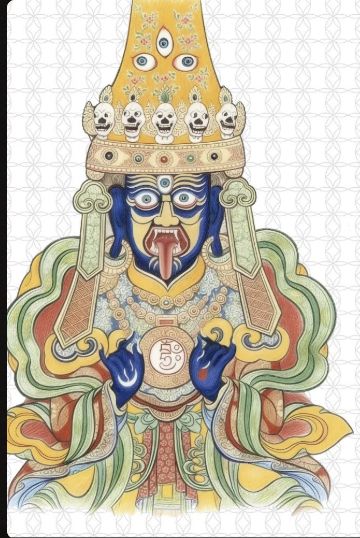
Zaki Lhamo
We retain this entry under the name supplied with the selected material. Its detailed local history, the identification of the illustration and any specific ritual account still require a reliable source. We therefore do not present a definitive origin story or promise wealth from her image. You can view the related pieces while this cultural record is being completed.
Zaki Lhamo is associated with the local devotional tradition of Zaki Temple in Lhasa. Her specific identity should be preserved rather than merged with other female protectors.
This entry introduces Zaki Lhamo through the selected artwork. A fuller account of her local devotional context will follow once its sources and the identification of this image have been confirmed.
Explore depictions & cultural recommendations →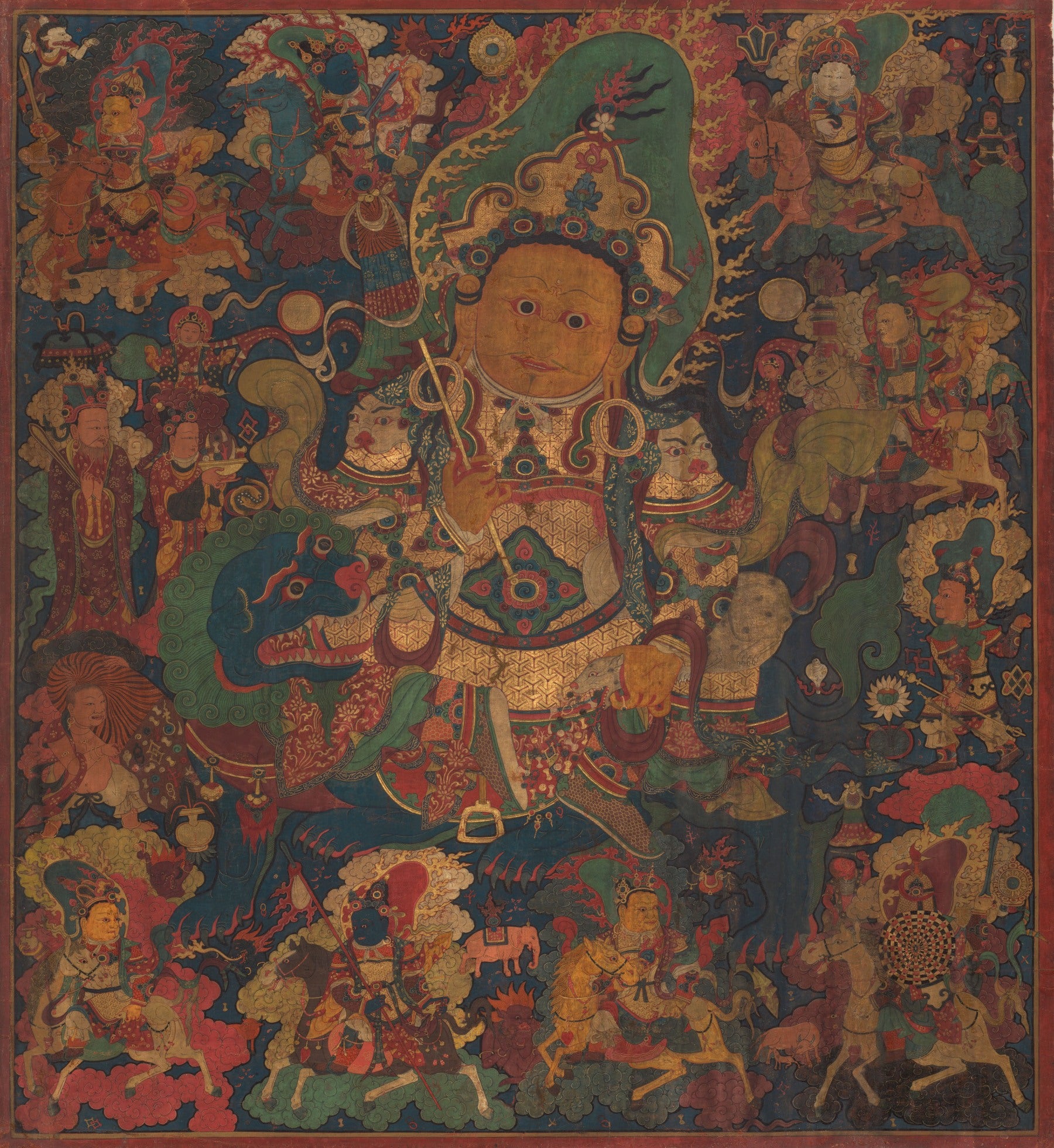
Artwork & source · CC0 / Public Domain
Vaishravana
Vaishravana is the Guardian King of the North. In familiar Himalayan depictions, royal dress or armour, a victory banner and a jewel-producing mongoose help identify him. Some paintings place him among other wealth figures. Shared attributes do not make all those figures identical; attend to the central figure and each member of an assembly separately.
Cultural reference · Rubin Museum
Vaishravana is a guardian king and protector associated with resources and wealth. He is distinct from the different forms of Jambhala.
His image invites reflection on the relationship between protection and resources: caring for what sustains a community, using prosperity responsibly, and remembering that security can create room for generosity.
Explore depictions & cultural recommendations →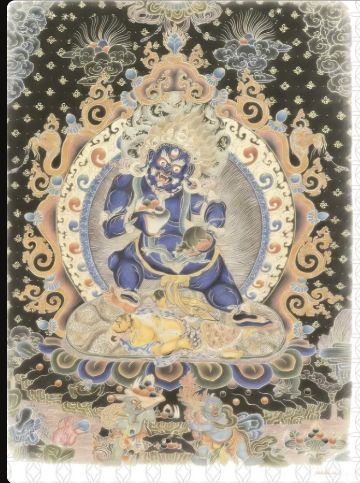
Black Jambhala
Black Jambhala is one form within a wider group of Buddhist wealth deities. Himalayan Art Resources describes a familiar standing, two-armed type with a skull cup and mongoose, while also documenting different transmissions. The colour is part of an iconographic identity, not a ranking of power. Compare the actual image and named form before assuming it matches another Jambhala representation.
Cultural reference · Himalayan Art Resources
Black Jambhala is a distinct form within Jambhala imagery. A dark body alone is insufficient to identify him; attributes and the composition also matter.
Traditionally, Jambhala practices concern wealth and the material conditions supporting religious life. In a contemporary reflective setting, Black Jambhala’s image can suggest facing scarcity with steadiness, treating resources responsibly, and remembering that generosity and practical effort belong beside aspiration.
Explore depictions & cultural recommendations →
Yellow Jambhala
Yellow Jambhala is a familiar wealth-deity form. A fruit and a mongoose producing jewels are recurring attributes in museum descriptions of Jambhala imagery. These symbols place material prosperity within a religious visual language. They do not turn an ornament into a financial promise. In this chapter, their meaning is held alongside the question of how resources can support generosity.
Cultural reference · Himalayan Art Resources
Yellow Jambhala is a Buddhist wealth deity, often shown seated with a mongoose and a fruit. His identity is distinct from Black Jambhala and Vaishravana.
Devotional traditions associate him with prosperity and the resources that sustain religious practice. His image can also open a thoughtful conversation about sufficiency: what we need, what we value, and what we can share. For Potala Karma, the emphasis is abundance considered alongside generosity, gratitude, and responsible stewardship.
Explore depictions & cultural recommendations →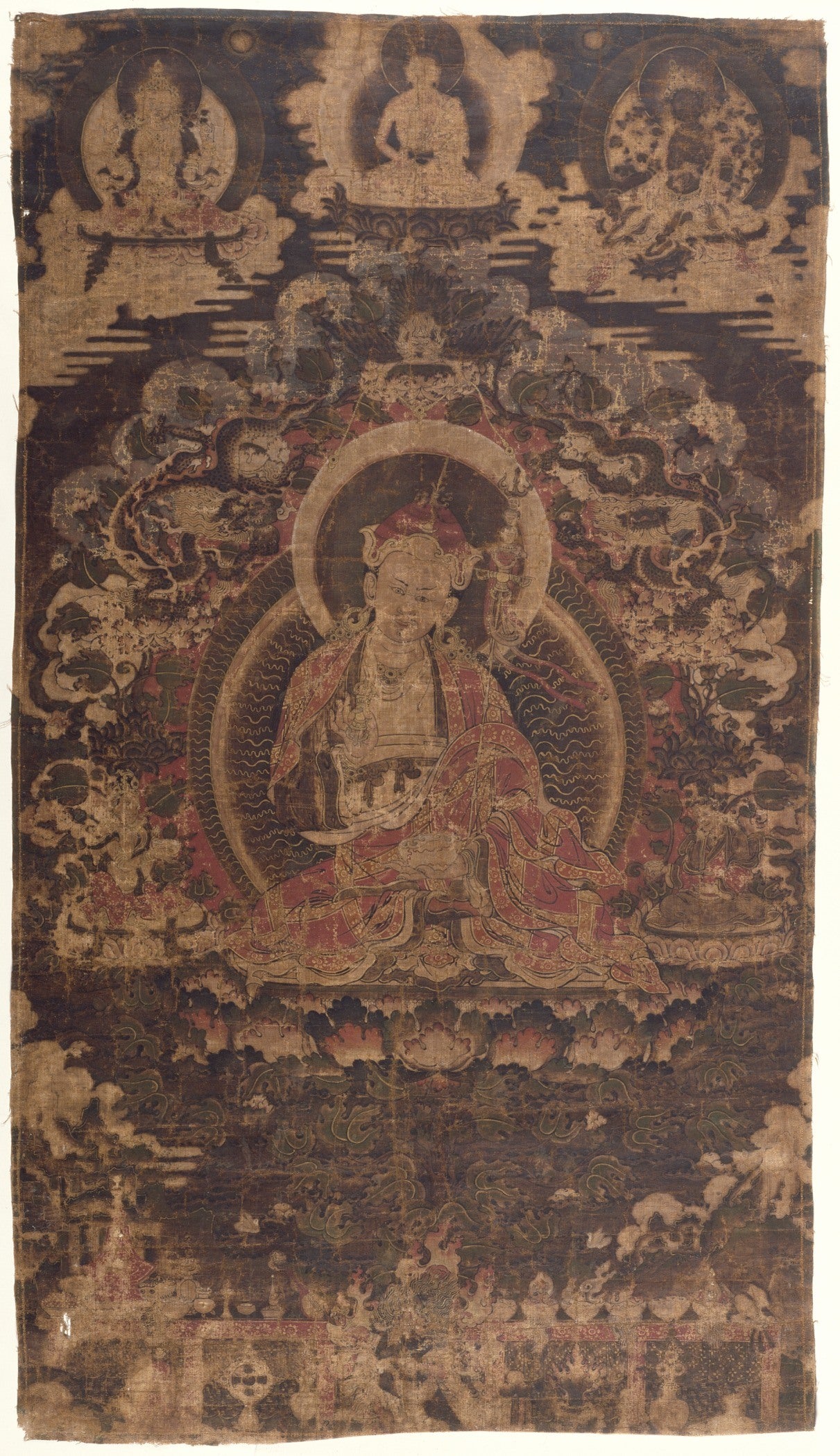
Artwork & source · Public Domain (LACMA released image)
Padmasambhava
Padmasambhava, widely known as Guru Rinpoche, is an eighth-century master revered for the transmission of tantric Buddhism in Tibet. Familiar portraits may include a distinctive cap, vajra and skull cup. His sacred biographies also contain visionary narratives. Keeping historical context and devotional accounts distinct allows both to be encountered with greater care.
Cultural reference · The Met
Padmasambhava, also known as Guru Rinpoche, is a revered teacher central to Tibetan Buddhist traditions. The lotus hat, vajra and skull cup are familiar attributes.
His life stories weave historical memory with visionary and sacred narrative. His image is associated with transformative teaching, resilience, and the transmission of wisdom. For everyday reflection, it invites openness to learning and the patience to carry insight into action.
Explore depictions & cultural recommendations →


 Green Tara New Composition Thangka Pendant
 Green Tara Selected Composition Thangka Pendant
 Green Tara Thangka Pendant


